
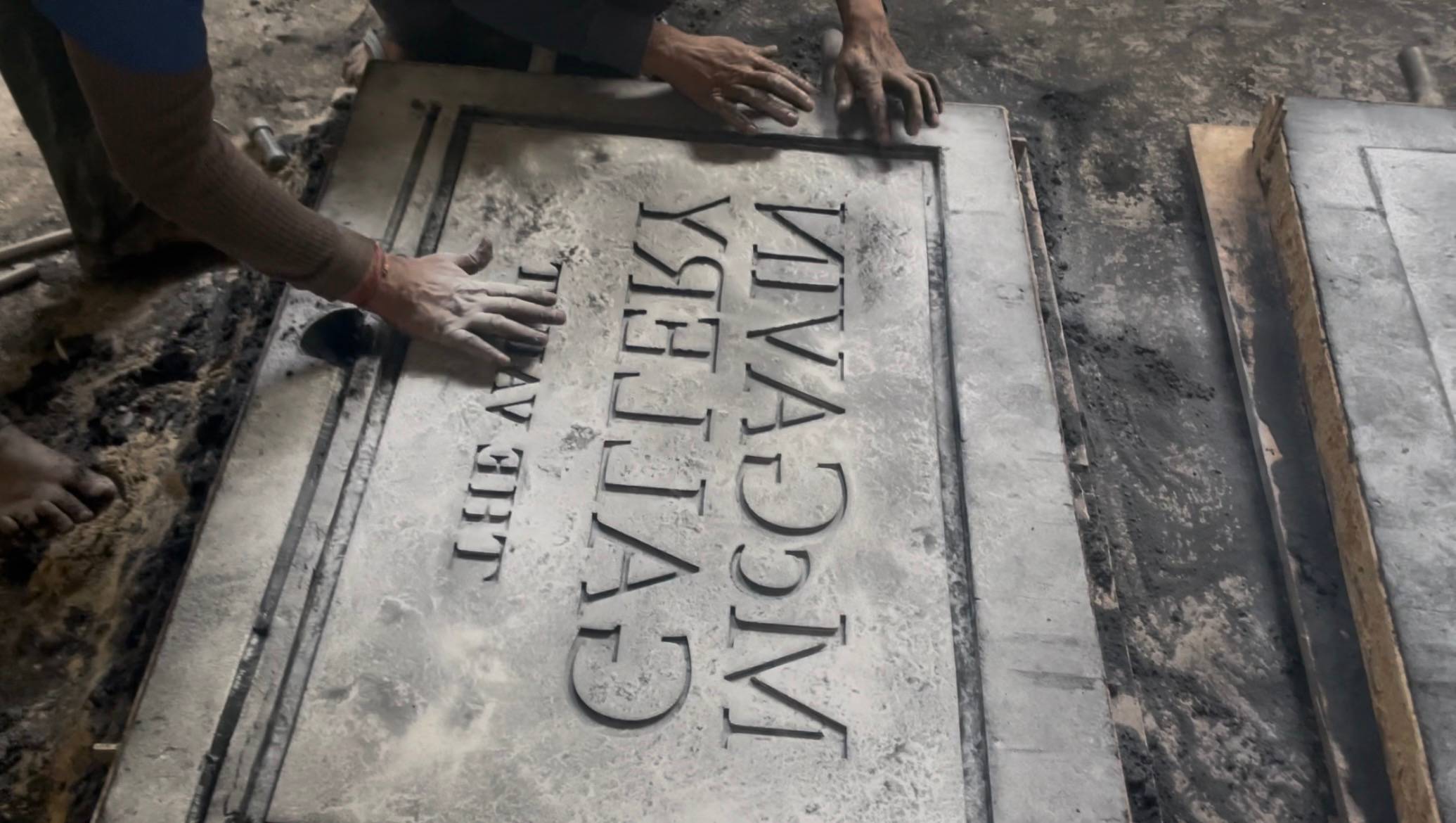
Before it became a sign, it was simply heat, sand, and nerve.
The exterior brass plaque for McGAVIN GALLERY was made using a traditional sand-casting process in India, a method that predates modern manufacturing by centuries.
Each mold is formed by hand.
Molten brass is poured manually and the surface records every grain of sand it touches, leaving behind a texture that cannot be faked or digitally replicated.
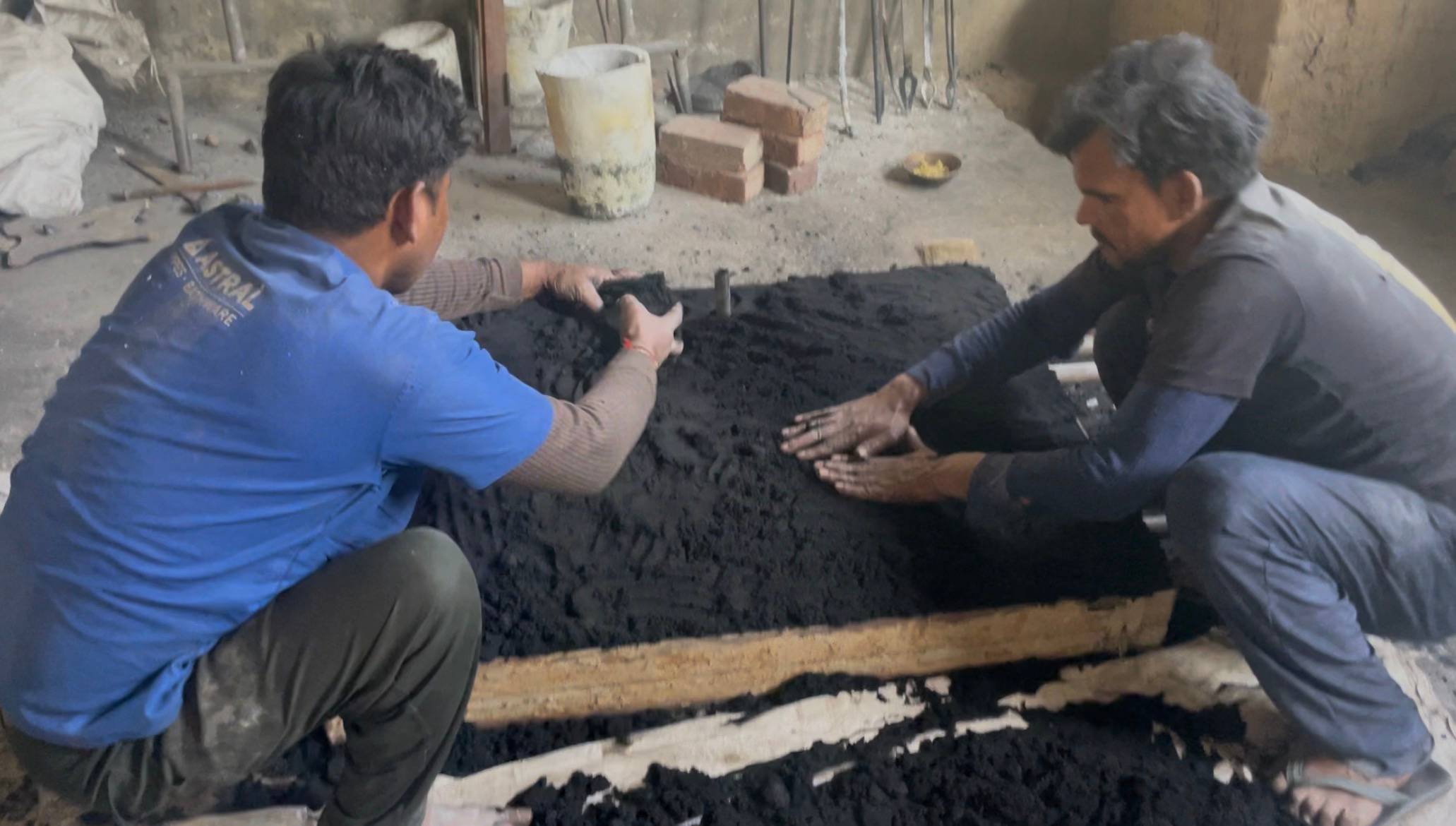
What struck me immediately about the foundry and their process wasn’t just the craftsmanship, it was the setting.
The work takes place in a small, unassuming room. No pristine studio. No climate control. No CNC automation.
The craftsmen move with quiet confidence, shaping molds and pouring metal with a precision that leaves no margin for error.
Also, no gloves or no steel-toe boots; but in at least one case, flip-flops.
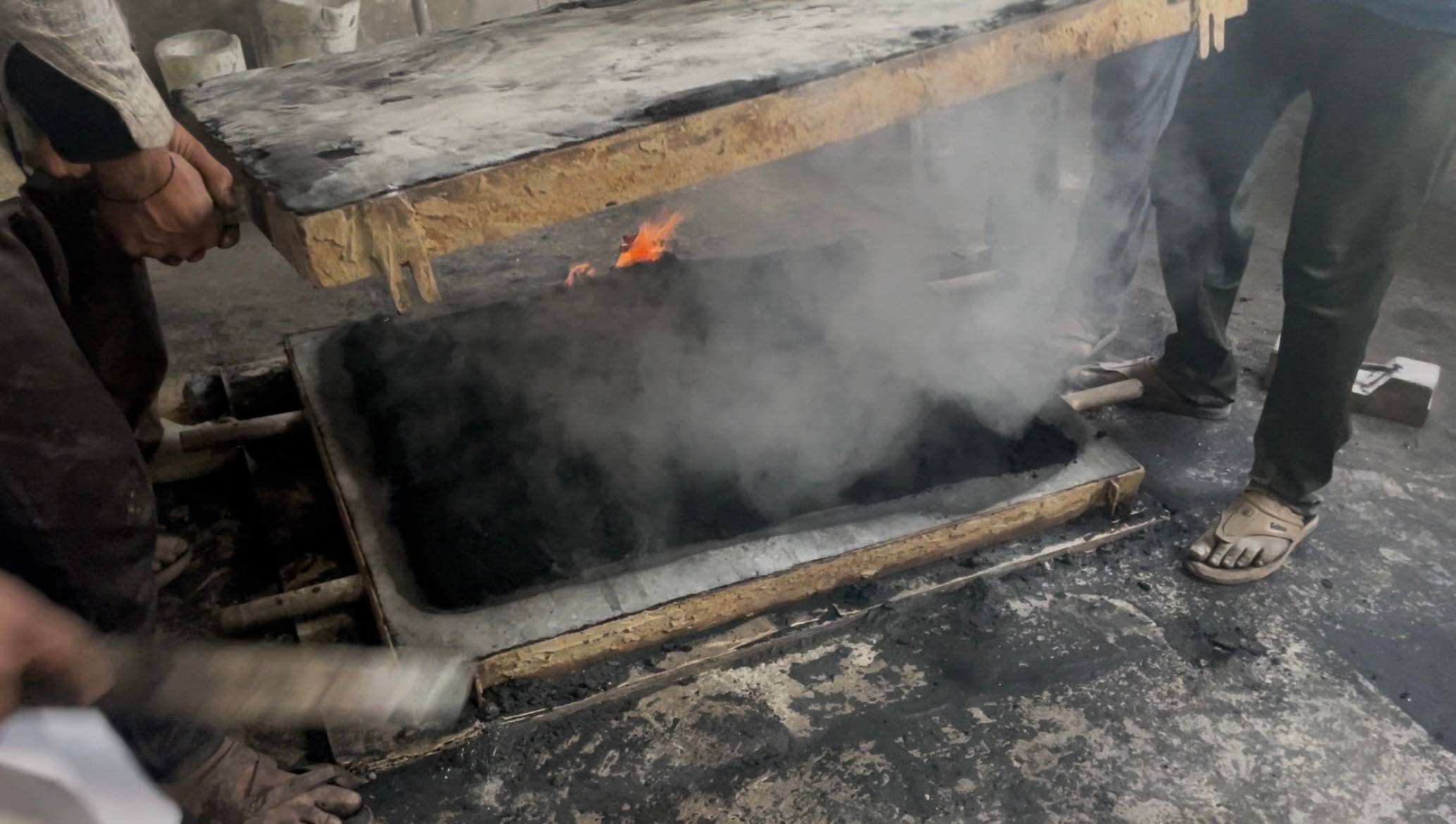
It’s the sort of thing that would cause an American safety inspector to faint on the spot.
And yet, nothing about the process felt careless. These artisans know exactly what they’re doing. Their movements are economical, practiced, and deliberate.
The contrast between what American society expects a “refined” process to look like and what excellence actually looks like here is stark and deeply revealing.
In the U.S., we often associate quality with regulation, visual order, and at least a dress code. Elsewhere, mastery is communicated through repetition, restraint, and trust in the hand.
Different environments, but same standard of excellence.
This sign itself reflects this duality.
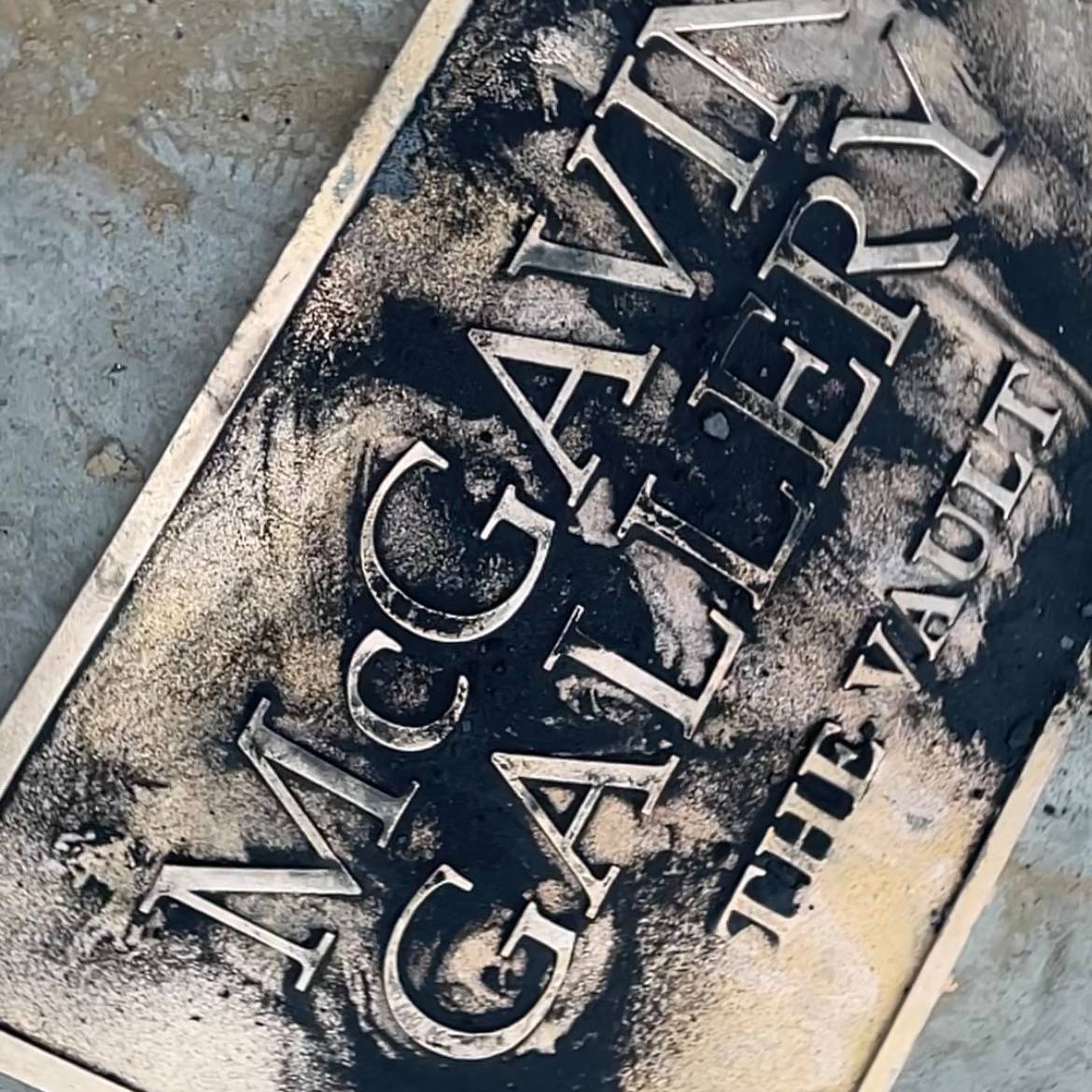
The brass background retains the raw imprint of the sand-casting process with every subtle imperfection preserved. The letters McGAVIN GALLERY and THE VAULT, along with the border, are hand-finished in a high-polish, catching light cleanly and deliberately. Texture and refinement exist side by side, neither overpowering the other.
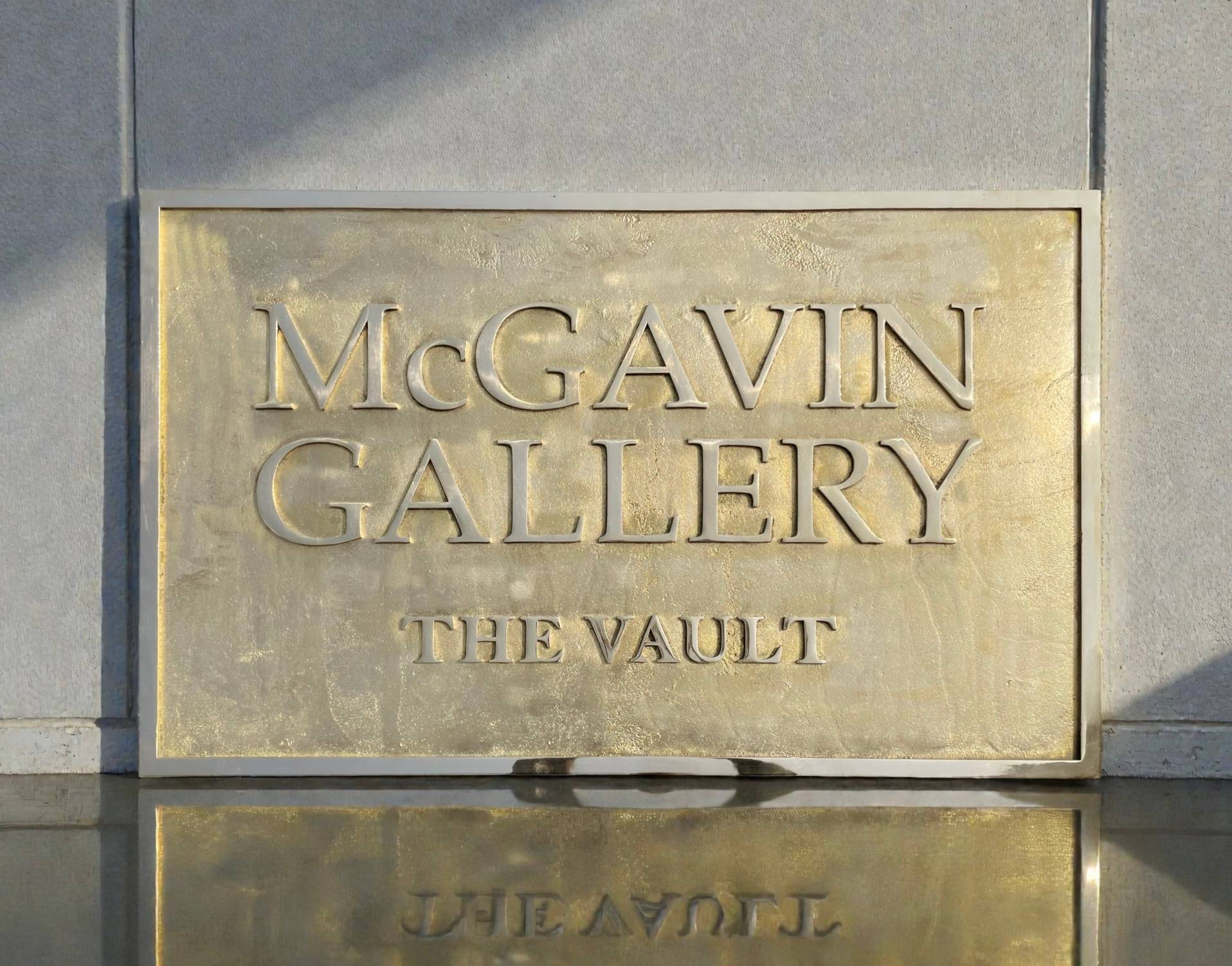
Nothing here is decorative for decoration’s sake. The surface tells the story of how it was made.
Once completed, the solid brass sign traveled halfway around the world before being installed on the exterior of the gallery in Houston, Texas. A quiet journey, but a meaningful one. It now sits exactly where it belongs — marking a space devoted to objects with history, process, and provenance.

If this sign suggests anything about what’s to come from McGavin Gallery, it’s this:
I care deeply about how things are made.
And I believe the story behind an object matters just as much as the object itself.