
Some artists spend decades trying to find a signature style.
Manuel Nuñez found three.
When most artists discover a formula that the art market responds to, they spend the next decade repeating that winning combination over and over again. Galleries can't get enough of it and collectors clamor to get one and willingly pay premiums. The artist becomes recognizable and celebrated.
But each time that Manuel Nuñez hit that stride, he had the courage to leave it behind.
Over a career spanning more than three decades, Nuñez moved from commercial illustration to fashion drawing, from contemporary figurative painting to deeply symbolic spiritual imagery. And along the way he created some of the most technically accomplished and emotionally resonant figurative work of his generation.
And yet what makes Manuel Nuñez's art so compelling is not merely his skill, but it's his conviction.
Because beneath every phase of his career and body of work lies the same question:
What is worth fighting for?
Manuel Nuñez went from Commercial Art to Fine Art
Before becoming known as a fine artist, Manuel Nuñez built a successful career in commercial illustration and design.
After attending Art Center College of Design in Pasadena, Manuel went on to teach there as well as at Otis Parsons in Los Angeles. His commercial clients included major retailers and brands such as Pioneer Electronics and Redken, and his work ranged from fashion illustration for Vogue magazine and designer Michèle Lamy to advertising imagery and album covers for Donna Summer.
And while those years in the commercial world were quite lucrative for Nuñez, they also taught him how to communicate.
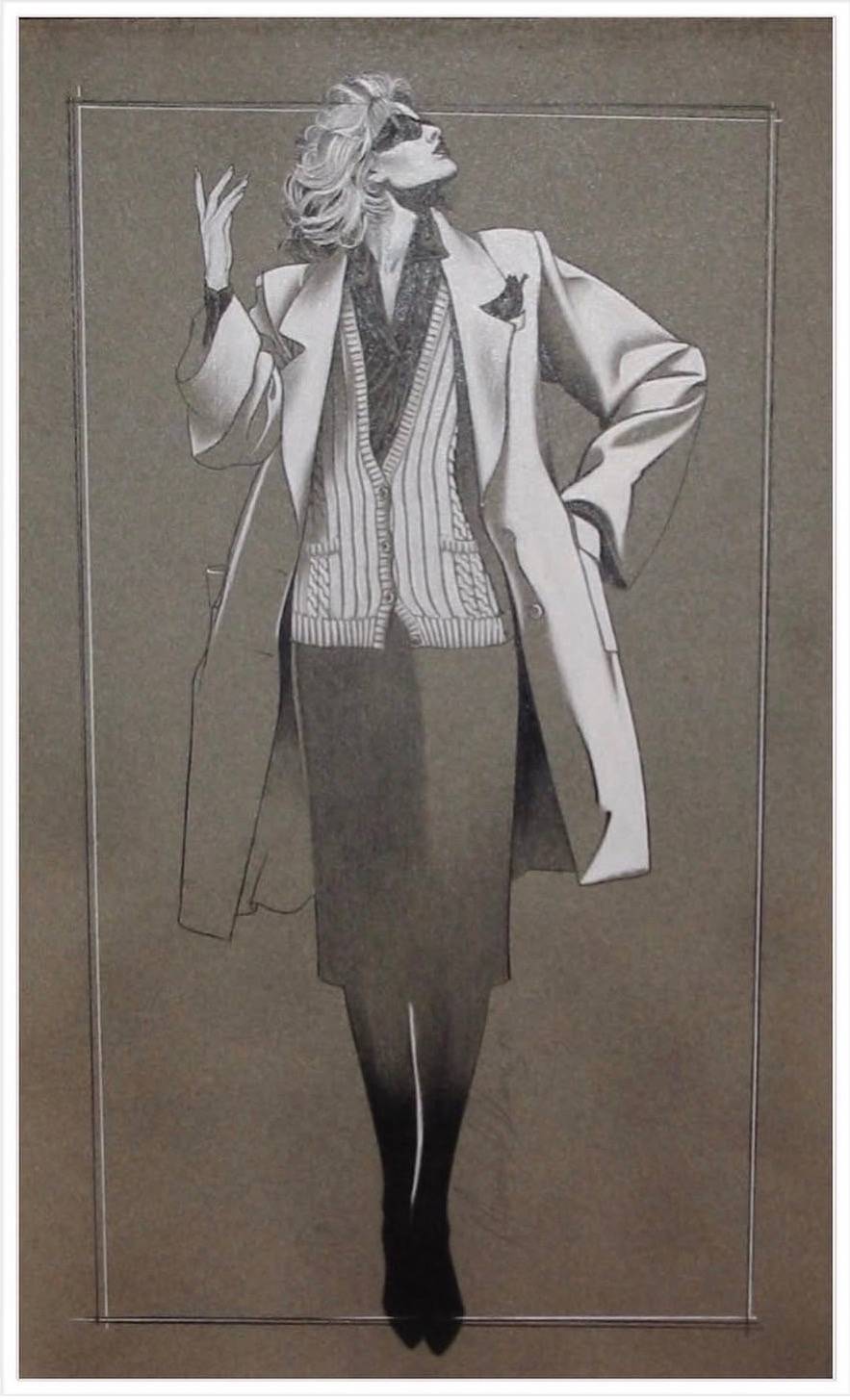
Manuel Nuñez mixed media charcoal and white colored pencil Fashion Illustration from 1989
Every line had purpose.
Every color had meaning.
Every composition directed the eye.
Every shape served a larger idea.
You can feel the discipline of illustration beneath the surface of his paintings, even when the subject matter became increasingly poetic, his fine art works still held the power of communication that he learned from the commercial world.
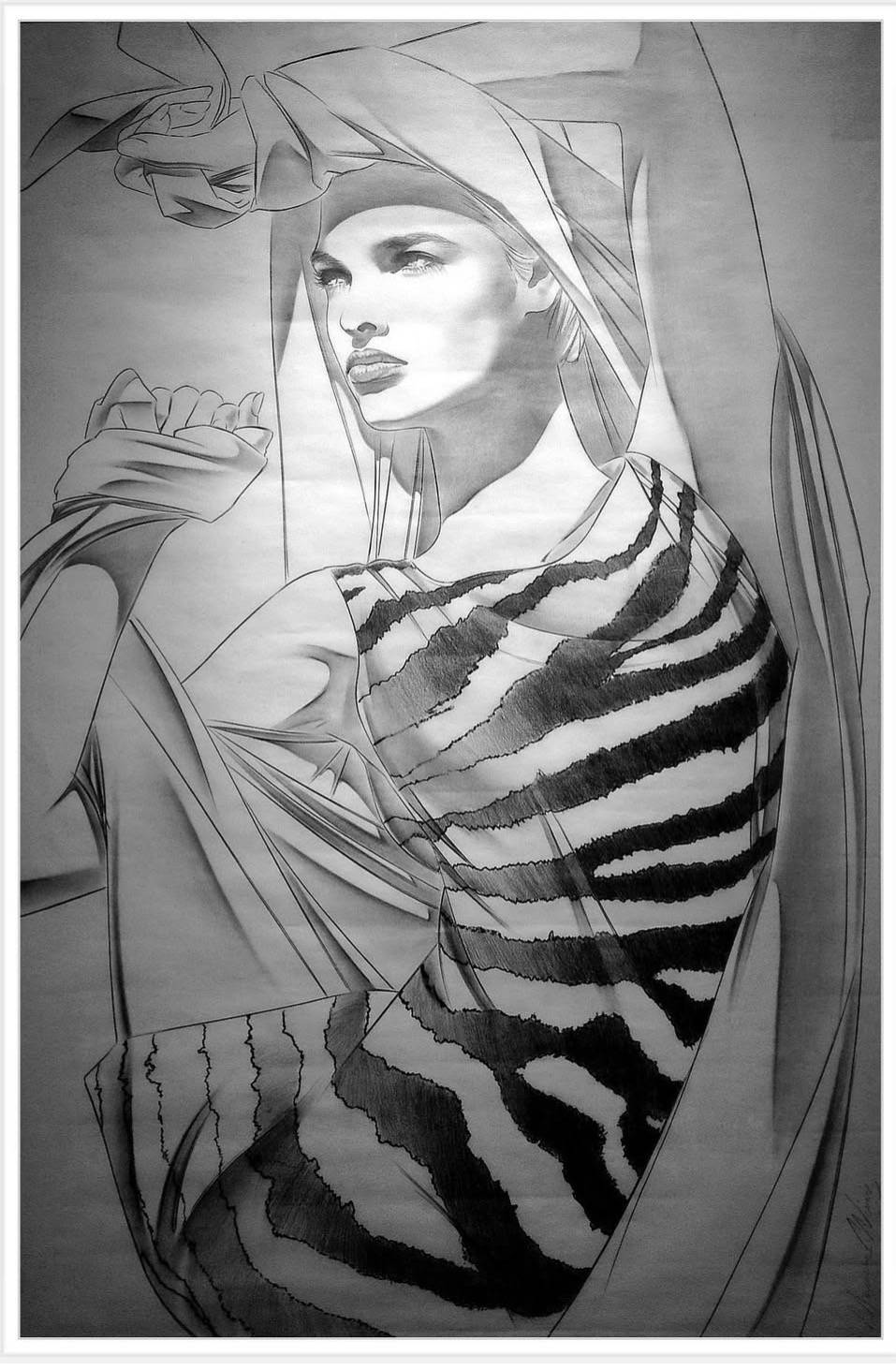
Manuel Nuñez Fashion Illustration for Michéle Lamy of her 1985 Zebra Dress
But commercial illustration isn't typically driven by meaning, it's driven by product. Everything was surface level at that stage for Manuel, and by 1989 he felt compelled to dig a little deeper.
Manuel Nuñez's Gilded Years
For many collectors, the most sought-after chapter of Nuñez’s career was also his shortest. During a relatively brief period, between 1990 and 1994, Manuel began creating striking images of women set against luminous fields of hand-applied 23-karat gold leaf. This body of work bridged fashion illustration and contemporary figurative art in an exciting and alluring way.
Works such as Take Me Back represent a remarkable intersection of fashion illustration, symbolism, portraiture, and spiritual allegory.

The women were powerful but vulnerable.
Elegant but resilient.
Their hair became weather.
Their emotions became movement.
The gold backgrounds seemed less like decoration and more like atmosphere.
And their tattoos communicated messages of hope, pain, and prayer.
This period only lasted a handful of years, which partly explains why collectors respond to it so strongly today.
The body of work is finite and partly due to the infamous story of his 1994 work The Tempest, initially commissioned and then rejected by adult film pornography produced Ed Powers.

And unlike artists who revisit successful ideas repeatedly, Nuñez felt that this work was misunderstood, so he set eyes on a new direction.
There would be no endless production of the same imagery.
No assembly line of look-alikes.
Just a brief, brilliant period that now feels increasingly difficult to replace.
Why Gold Mattered to Manuel Nuñez
In Nuñez’s work, gold was never merely ornamental, it carried symbolic weight.
Throughout art history, gold has appeared in Byzantine icons, Russian religious paintings, medieval manuscripts, and sacred objects intended to connect earthly life with something beyond it.
Nuñez understood this tradition deeply.
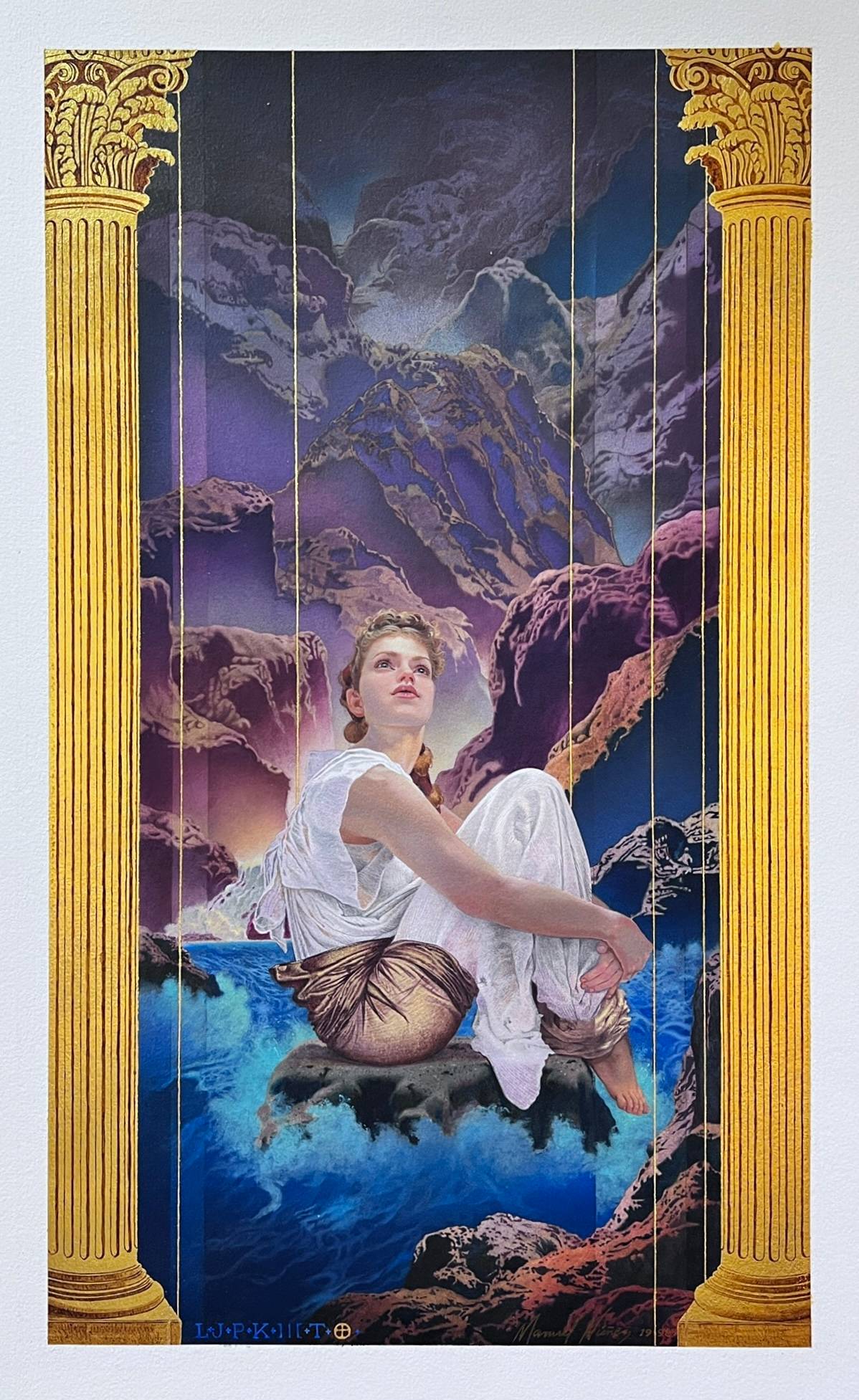
His use of 23-karat gold leaf became one of the defining elements of his work, creating paintings that seem to glow from within rather than reflect light from the outside.
The effect is difficult to reproduce in photographs.
But standing in front of an original is an entirely different experience.

The surface shifts.
The light changes.
The painting feels alive and you become entranced by the piece.
Manuel Nuñez and The Good Fight
Eventually the symbolism that had quietly existed in the details of the tattoos, became the subject itself.
The elegant women remained, but now they appeared as spiritual warriors. Figures wrestling with ideas of faith, temptation, redemption, sacrifice, and perseverance.
No work embodied this more completely than his painting The Good Fight.
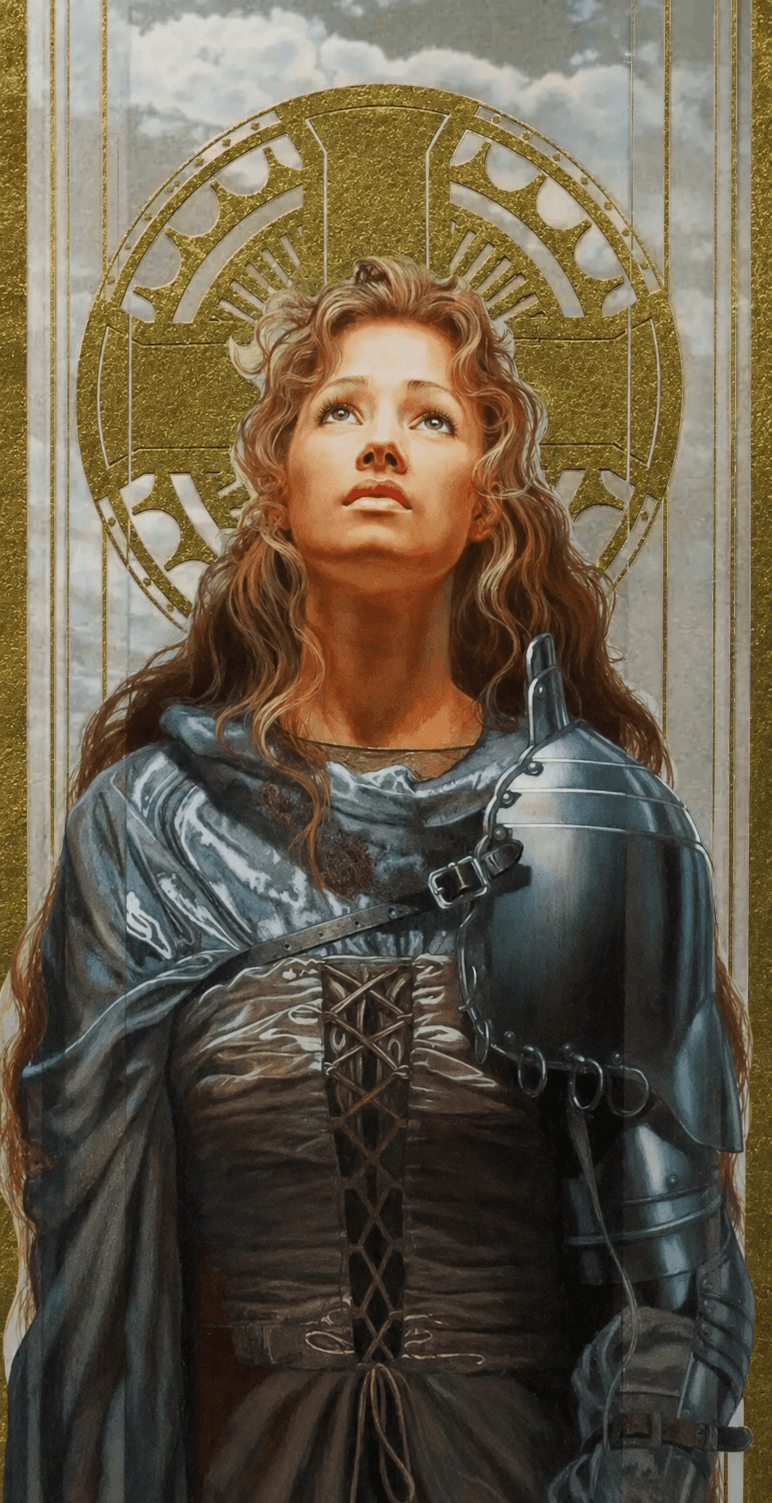
The piece has become one of the defining images of Nuñez’s career.
Not because it was fashionable.
Because it was sincere in its emotion.
Sincerity can be an uncomfortable thing in contemporary art.
Irony is easier.
Ambiguity is more common.
But conviction requires risk.
Manuel Nuñez always embraced that risk.
His paintings are unapologetically centered around questions about morality, purpose, and spiritual struggle. They ask viewers to consider not simply what is beautiful, but what is meaningful and what is worth fighting for.
Why Manuel Nuñez Still Matters
Today, original works by Manuel Nuñez appear on the market only occasionally.
Most reside in long-held private collections, often with the original collector. While scarcity alone does not create significance, it often signals that there is something of significance worth learning about.
The truth is that Manuel Nuñez’s enduring appeal has very little to do with rarity.
It has everything to do with sincerity.
In a contemporary art world often dominated by trending cycles fueled by social media and work designed to provoke a reaction, like eating a banana, Nuñez’s paintings remain refreshingly direct in how they address questions about life and spirituality. They are unapologetically emotional, unapologetically beautiful, and unapologetically concerned with questions that have occupied humanity for centuries.
Hi work shines a light on love, faith, courage, loss, redemption, and hope.
These aren't fashionable subjects in contemporary art.
Yet perhaps that is precisely why the work feels so relevant today.
Whether looking at his luminous gold-leaf portraits of the early 1990s or the spiritual narratives that followed, one encounters an artist willing to risk popularity and success in pursuit of something more meaningful.
There is no cynicism hiding beneath the surface of Manuel's paintings. The paintings ask difficult questions because Nuñez was willing to wrestle with them himself.
As Manuel has gradually stepped away from actively creating new work for galleries, the body of work has become fixed. What remains is the record of a remarkable artistic life and a body of work that feels increasingly distinct from much of the contemporary art world.
As a gallery, these are exactly the artists worth fighting for.
Not because they're fashionable, but because they're important.
Because they possess technical mastery in service of genuine ideas.
Because they reward repeated viewing rather than momentary attention.
And because the best collections are not built around trends. They are built around collectors who have felt an inexplicable emotion when gazing upon a piece of art.
The emotion that Manuel Nuñez imparted in his work endures.