
For more than six decades, Antonio López Sáenz returned again and again to the people, architecture, traditions, and daily life of his native Mazatlán, Mexico.
Fishermen, musicians, families, street scenes, market vendors, dancers, churches, and neighborhoods all found their way into his paintings, drawings, prints, and sculptures.
His work became so intertwined with the cultural identity of Sinaloa that today it is difficult to speak about the visual history of Mazatlán without speaking about its Maestro, Antonio López Sáenz.
And yet outside of Mexico—outside even of northwestern Mexico—his name remains surprisingly under-recognized.
That disconnect is part of what makes his work so compelling today.
A Life Devoted to Painting

Born in Mazatlán, Mexico in 1936, López Sáenz studied at the historic Escuela Nacional de Artes Plásticas, formerly the Academy of San Carlos in Mexico City. His first exhibition was held in 1960, launching a career that would span more than sixty years.
During his lifetime, his work was exhibited throughout Mexico and internationally, including presentations in Washington D.C. at the Organization of American States, in San Francisco, Miami, and Michigan, introducing audiences beyond Mexico to the rich visual culture of Sinaloa. (El Colegio de Sinaloa)
But unlike many artists who pursue international recognition by abandoning local subjects, López Sáenz remained deeply connected to the place that shaped him.
Mazatlán was not simply where he lived, it was his subject through and through.
His paintings often feel less like observations and more like memories—scenes filtered through affection rather than documentation. Buildings lean slightly. Figures become simplified. Colors become emotional rather than literal. The result is a visual language that feels unmistakably his own.
Like all great masters, you know a López Sáenz when you see one.
And in a world of copycats, that’s rarer than most people might think.
More Than a Regional Artist
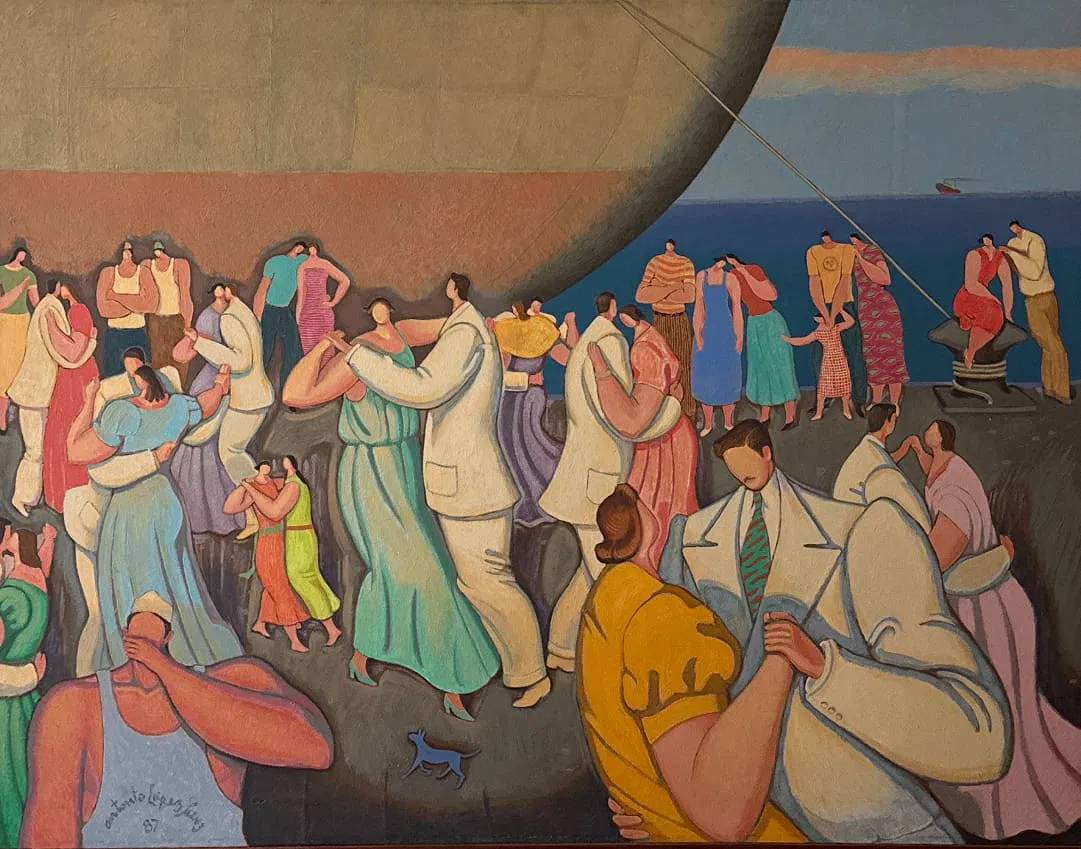
The phrase “regional artist” is often used as a compliment that accidentally becomes a limitation.
In López Sáenz’s case, it misses the point entirely.
Yes, his work is rooted in his home region. But so was the work of many great artists, like Cézanne, whose reputations eventually extended far beyond their home regions. The specificity of place is often what gives art its universality.
The people in his paintings belong to Mazatlán, but the emotions he painted belong to everyone.
That enduring significance is reflected in the institutional recognition his work received during his lifetime and continues to receive today. His paintings and sculptures are represented in important public collections, and his legacy remains central to the cultural identity of Sinaloa. The Museo de Arte de Mazatlán maintains a permanent exhibition space bearing his name, where his work is displayed alongside artists such as Rufino Tamayo, Francisco Toledo, José Luis Cuevas, and Vicente Rojo. (Cultura)
His influence extends even further.
The principal contemporary art gallery operated by the Instituto Sinaloense de Cultura in Culiacán carries his name: the Galería de Arte Antonio López Sáenz. (México es Cultura)
Artists are not often given permanent institutions in their honor during their lifetimes.
Fewer still become woven into the cultural infrastructure of an entire state.
Scarcity Without Speculation
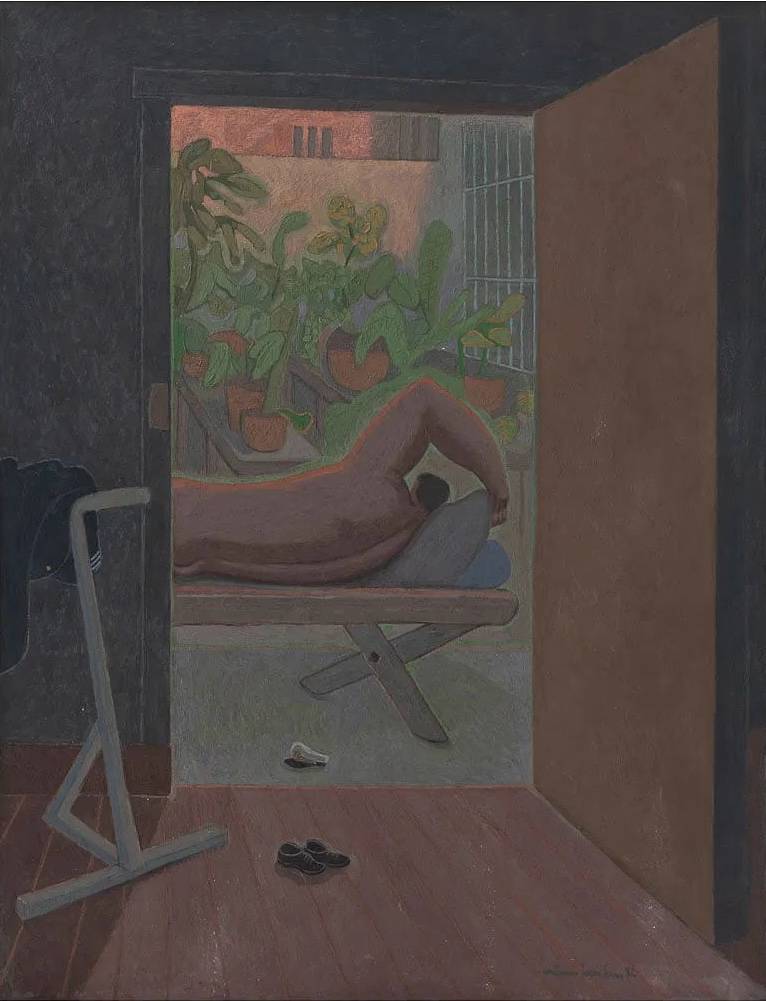
The art world has an unfortunate habit of talking about scarcity before significance.
With López Sáenz, the order should be reversed.
The significance came first.
The scarcity is simply the reality that follows.
Following the artist’s passing in 2023, the available body of work became finite. There will be no new paintings. What exists today is the complete record of a remarkable artistic life. (El Colegio de Sinaloa)
That reality feels particularly important because many of the strongest works remain in family collections, institutional collections, or long-held private collections throughout Mexico.
The best examples do not appear often.
And when they do, they tend to move quietly and quickly.
The Next Chapter
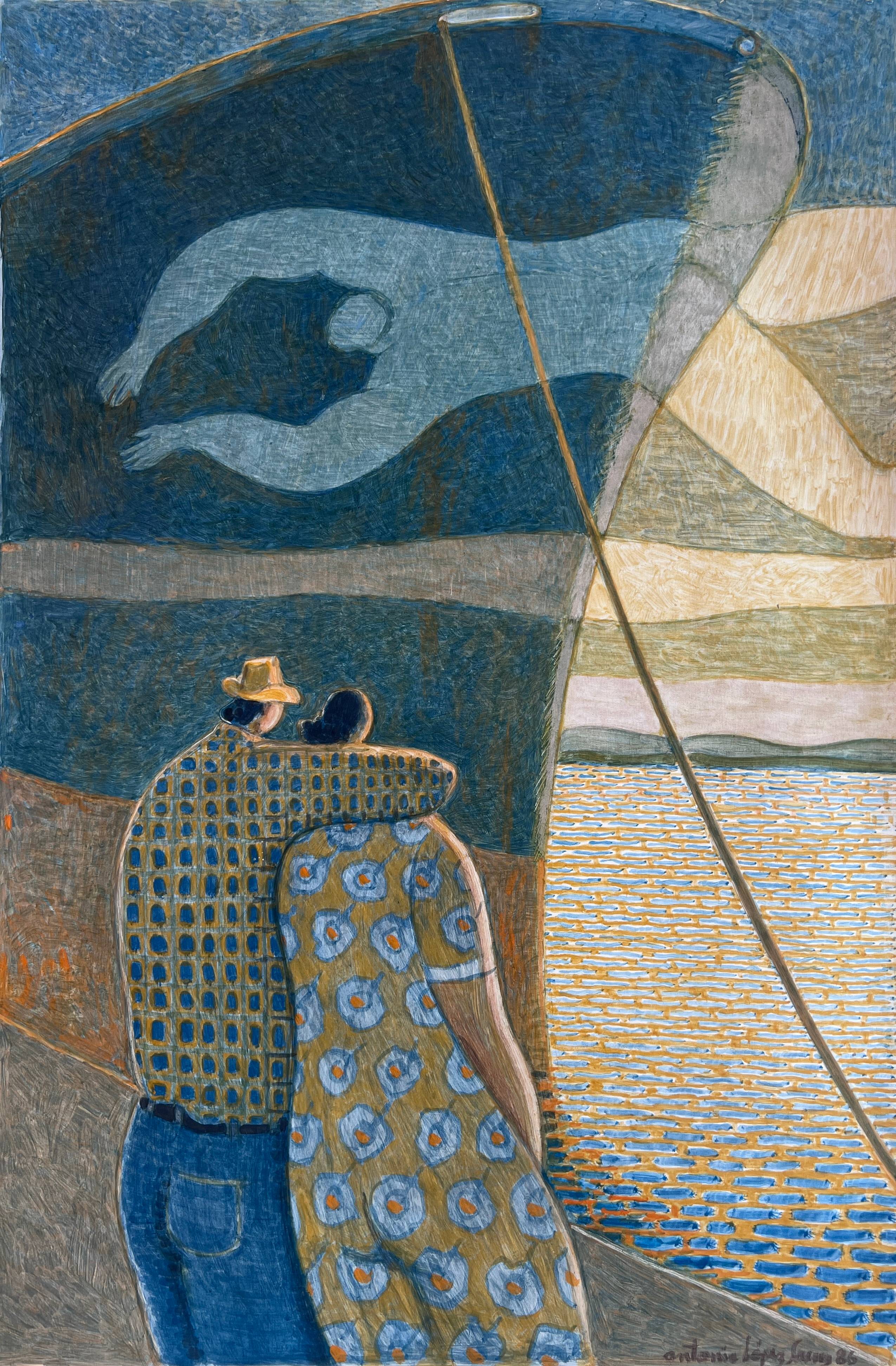
One of the most encouraging developments surrounding López Sáenz’s legacy is the effort being undertaken by his family to preserve and share it with future generations.
Plans are underway to transform the Maestro’s home into a museum dedicated to his life and work—a fitting tribute to an artist whose career became inseparable from the cultural story of Mazatlán.
The idea evokes comparisons to the preserved homes of great literary and artistic figures around the world like Ernest Hemingway's home in Key West, Florida, Frida Kahlo's Casa Azul (Blue House) in Mexico City, Mexico, Pablo Neruda's House La Chascona in Santiago, Chile, or Salvador Dalí House in Port Lligat, Spain. Places where visitors can move beyond reproductions and books to encounter the environments that shaped the artist’s vision.
For collectors, historians, and admirers of Mexican art, that kind of institutional commitment matters.
It signals that a legacy is being actively stewarded rather than merely remembered.
Why Collectors Are Paying Attention

There is a particular pleasure in discovering an artist before the broader market fully catches up.
Not because of speculation, but because of conviction.
Collectors are often encouraged to get in ahead of the curve, while in reality they're just chasing trends. But the most rewarding collections are rarely built that way. The more impressive collections are built around artists whose work carries authenticity, cultural importance, technical accomplishment, and a distinct point of view.
Antonio López Sáenz offers all four.
His paintings are deeply rooted in place yet universally human. They possess narrative, humor, tenderness, and extraordinary character. They document a world while simultaneously transcending it.
And perhaps most importantly, they feel increasingly difficult to replace.
In a contemporary art market crowded with work that could have been made almost anywhere, López Sáenz reminds us of the power of an artist who belonged unmistakably to somewhere.
He painted Mazatlán.
And in doing so, he created something far larger than a regional story.
He created a legacy.